Saturday, April 20, 2019

New York Summer Acting Programs - Angie Elliston - Maggie Flanigan Studio


The New York summer acting programs at the Maggie Flanigan studio train professionals actors based on the acting technique that was created by Sanford Meisner. In this interview Angie Elliston discusses how Meisner training during the six week program was different than she expected. Q: Angie, what did you think it meant to train as an actor before you started the six weeks summer intensive? A: What did I think it meant to train as an actor? I suppose that I knew it had a lot to do with not just getting in tune with your emotions, but also it had things to do with movements and voice. I know it had a lot to do with a lot of other things. Sometimes I thought when I'm growing up; I would watch on TV how actors would train. It's just like looking at each other like marrying what you're doing and stuff, and you got this cliche about it. When I first got here, I did not expect that it would be this way because I remember Charlie came in the first day and he didn't even tell us how it was going to be. He just started telling us that you're going to repeat what I'm saying, but you're going to change the plurals. He does like that first Meisner technique which is the repetition. We were all just in shock. We were all amazed at how it worked so well. We learned how to hear, how to pay attention to the other person. We started realizing that in everyday life, these are things that we think we do, but we don't. You also learn a lot about yourself and the behavior of other people. I guess I did not know much about acting mostly because of where I come from. Then, coming here I thought it would be more about movement and expression, but it was not. It's more about internal. When you work with what's inside, you start working with the outside. It just automatically it starts showing the outside and that's the acting process. I just had to say that it was very unexpected everything I've learned. Q: What do you think training as an actor means now? Angela: Training as an actor now, after everything that we've learned and just these six weeks, I've determined that training has a lot to do with the relationship you have with yourself and accepting your emotions and learning how to just dive into different types of-- I don't know how I could put this. I would say like the relationship that you have with yourself and understanding how you work and accepting any emotions. Charlie made an example like suppressing your feelings. I had that problem at the beginning with certain emotions. I learned to accept those emotions and told myself that it's okay for them to come because it's me. It's my emotions. I'm entitled to my feelings. That's something that he kept repeating along through the semester and the summer. It stayed with me. I learned that it's just more about the relationship you have with yourself and observing other people. People watching is essential, listening and just paying attention and just trying to see and read the other person. That's like a ride. He used this metaphor. It's always going to stay with me. Acting is like a water skier. The other person is the boat that guides you around the water, and you were the water skier. You flow wherever the ship goes- it takes you. Q: What happened during the six weeks that changed your perspective? Was there a particular moment in the exercise? Was there a moment of rehearsal, a personal discovery that changed your view of what it means to train as an actor? Angela: I learned a lot in many different ways in rehearsals and class. In class, I would say that I learned, mostly when I would see Charlie teach the others, like my classmates. When I'm in the scene, I can't see myself. I don't know what I'm doing. I love what he says, and his feedback and I write that down, and I consider them and then everyone else, I see what they're doing. Well, we're all on the same level. We're all making the same mistakes. I learned mostly by looking at everyone else helped me. It worked better because we were an intimate group. We were a small group. We got to know each other better that way. Just seeing everyone grow from day one to now, the last days it's pretty amazing. We're all proud of each other as well. There's no competition or anything. We're all helping each other. Rehearsals, well the first day, Charlie immediately gave us an active partner. It was weird because I didn't know him, but we got to know each other well through the exercises, which is the Meisner of asking each other questions, repetition, and we grew together. I learned a lot just through my partner, helping each other, watering each other like we were plants. That's how I viewed that. I learned a lot through rehearsals, and Charlie says that's where you grow, and it's genuine. You build through repetitions and through seeing other people's mistakes in class, and that's mostly how I think I've grown in this summer. Q: What did you learn about yourself that was a surprise or that changed you? You mentioned a little bit before about suppressed-- Angela: Yes, that's what I was about to say. I was surprised on how certain types of feelings, mostly feelings of intense sadness or-- Something that shocked me, something that I did not know about myself that I learned here was because I didn't know how to stand up for myself. I didn't know that. He said it. I guess everyone noticed, but I had no idea. He speaks through the repetition and the conflict exercises that, this is Meisner training, I wouldn't have to stand up for myself. Here I had my partner just fighting with me, and Charlie's told me to take things personally, take it in because as an actor, you have to take things personally and be comfortable with conflict. How is there going to be any conflict if you don't stand up for yourself? I didn't, I would just let this pass, and I noticed that I just brushed off any insult or conflict that was trying to happen. I didn't want anything to do with it. I realized that I run away from my problems and I don't stand up for myself. Instead, I walk away from it. I finally learned to confront it, and when I did eventually stand up for myself and face my partner on the scene, I was blown away, and I almost had hysteria. I wouldn't stop crying, and it felt so real. Then after we finished, I had to review everything that had just happened because I had forgotten entirely. That's how it felt like to be in the moment and be out of your head and focus on the other person, which is what acting is all about. Q: How would you describe Charlie as a teacher? Angela: Charlie is-- I guess what I liked about him is that he's passionate about his students. He takes everything very seriously, and since day one, he says that you've got to want this. Almost in every class, he always finishes the course with something to take home with, some nice motivation, which was still really lovely. He's harsh. He will challenge you. He doesn't have much patience, but that's only because he has a lot of passion, and he does explain that. That's just how he is. That's important because if you want to be an actor, it is a challenging industry, and no one is going to give you mercy; no one's that nice to you. It's very raw. It's very harsh, and Charlie teaches you that, and he says it from the beginning like this is how it is. He challenges you If you need to want this, and you're going to get so frustrated with yourself, and he will make you frustrated with yourself. That's the point, that's how you grow. Once you finally achieve that stuff, you feel so much-- You build, you feel so much better, and you realize that everything he did, he knows exactly what he's doing. I think that's how I would describe him. He challenges you, and he is super passionate about all of his students and what he teaches. Q: There are a lot of summer intensives in Manhattan, a lot of Meisner summer intensives. Why did you decide Maggie Flanigan Studio was the place for you? Angela: Maggie Flanagan is not trying to sell you the school and the classes or anything. It's all just very genuine and authentic. I think that's what I liked about it. When I did more research on it, and I had heard of other people who studied here, I was intrigued. When I met Charlie, I saw that he was genuine about this. He wasn't trying to sell me anything. Instead, he said, "I want to see if I want to teach you. I want to see if you are passionate about this because you have to be because this is intense. This is real life. This is acting." I guess that was my impression of it. Q: You mentioned before how your class helped you watching the other students and the sense of community since you were a small class. How did that closeness to the other students help you through the six weeks? Angela: I would say that because there were fewer students, there was less competition, more time for one another. More time for my partner and me, and also for the others. It's always like there's more time for one another. You feel closer to Charlie as well. We all realized that we're in this together. I think it's just you feel more intimate. You feel like more closer to them. If there were more people, it wouldn't be the same at all. I like that it was a small group and we all got to know each other better. We all are so different from different places around the United States. The age gaps are enormous, but we're all at the same level, and we were all struggling. At the same time, I felt like we were all holding hands together and we were getting through this. That's what I liked about it. Because it was small, we were closer. Admission to acting programs, including the six week summer intensive at the Maggie Flanigan studio is based on an interview with Charlie Sandlan. Students who are ready to commit to a professional actor training can learn more by visiting the studio website or by calling the studio during regular business hours at (917) 789-1599. Maggie Flanigan Studio 153 W 27th St #803 New York, New York 10001 +1 917-789-1599 www.maggieflaniganstudio.com/ goo.gl/maps/oxqqExybwL32 plus.google.com/112291205845820496849 twitter.com/MeisnerActing www.facebook.com/MeisnerActing/ https://flic.kr/p/TsqaRE

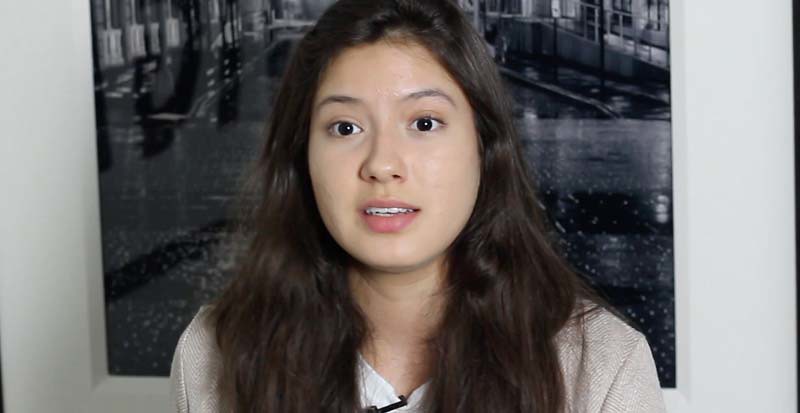
Summer Acting Program - Angie Elliston - Maggie Flanigan Studio 01


Summer Acting Program - Angie Elliston - Maggie Flanigan Studio 01 The New York summer acting programs at the Maggie Flanigan studio train professionals actors based on the acting technique that was created by Sanford Meisner. In this interview Angie Elliston discusses how Meisner training during the six week program was different than she expected. Admission to acting programs, including the six week summer intensive at the Maggie Flanigan studio is based on an interview with Charlie Sandlan. Students who are ready to commit to a professional actor training can learn more by visiting the studio website or by calling the studio during regular business hours at (917) 789-1599. Maggie Flanigan Studio 153 W 27th St #803 New York, New York 10001 +1 917-789-1599 www.maggieflaniganstudio.com/ goo.gl/maps/oxqqExybwL32 plus.google.com/112291205845820496849 twitter.com/MeisnerActing www.facebook.com/MeisnerActing/ https://flic.kr/p/Tsq251

Summer Acting Program - Angie Elliston - Maggie Flanigan Studio 02


Summer Acting Program - Angie Elliston - Maggie Flanigan Studio 02 Q: Angie, what did you think it meant to train as an actor before you started the six weeks summer intensive? A: What did I think it meant to train as an actor? I suppose that I knew it had a lot to do with not just getting in tune with your emotions, but also it had things to do with movements and voice. I know it had a lot to do with a lot of other things. Sometimes I thought when I'm growing up; I would watch on TV how actors would train. It's just like looking at each other like marrying what you're doing and stuff, and you got this cliche about it. When I first got here, I did not expect that it would be this way because I remember Charlie came in the first day and he didn't even tell us how it was going to be. He just started telling us that you're going to repeat what I'm saying, but you're going to change the plurals. He does like that first Meisner technique which is the repetition. We were all just in shock. We were all amazed at how it worked so well. We learned how to hear, how to pay attention to the other person. We started realizing that in everyday life, these are things that we think we do, but we don't. You also learn a lot about yourself and the behavior of other people. I guess I did not know much about acting mostly because of where I come from. Then, coming here I thought it would be more about movement and expression, but it was not. It's more about internal. When you work with what's inside, you start working with the outside. It just automatically it starts showing the outside and that's the acting process. I just had to say that it was very unexpected everything I've learned. Q: What do you think training as an actor means now? Angela: Training as an actor now, after everything that we've learned and just these six weeks, I've determined that training has a lot to do with the relationship you have with yourself and accepting your emotions and learning how to just dive into different types of-- I don't know how I could put this. I would say like the relationship that you have with yourself and understanding how you work and accepting any emotions. Charlie made an example like suppressing your feelings. I had that problem at the beginning with certain emotions. I learned to accept those emotions and told myself that it's okay for them to come because it's me. It's my emotions. I'm entitled to my feelings. That's something that he kept repeating along through the semester and the summer. It stayed with me. I learned that it's just more about the relationship you have with yourself and observing other people. People watching is essential, listening and just paying attention and just trying to see and read the other person. That's like a ride. He used this metaphor. It's always going to stay with me. Acting is like a water skier. The other person is the boat that guides you around the water, and you were the water skier. You flow wherever the ship goes- it takes you. Maggie Flanigan Studio 153 W 27th St #803 New York, New York 10001 +1 917-789-1599 www.maggieflaniganstudio.com/ goo.gl/maps/oxqqExybwL32 plus.google.com/112291205845820496849 twitter.com/MeisnerActing www.facebook.com/MeisnerActing/ https://flic.kr/p/Tsq25S

Summer Acting Program - Angie Elliston - Maggie Flanigan Studio 03


Summer Acting Program - Angie Elliston - Maggie Flanigan Studio 03 Q: What happened during the six weeks that changed your perspective? Was there a particular moment in the exercise? Was there a moment of rehearsal, a personal discovery that changed your view of what it means to train as an actor? Angela: I learned a lot in many different ways in rehearsals and class. In class, I would say that I learned, mostly when I would see Charlie teach the others, like my classmates. When I'm in the scene, I can't see myself. I don't know what I'm doing. I love what he says, and his feedback and I write that down, and I consider them and then everyone else, I see what they're doing. Well, we're all on the same level. We're all making the same mistakes. I learned mostly by looking at everyone else helped me. It worked better because we were an intimate group. We were a small group. We got to know each other better that way. Just seeing everyone grow from day one to now, the last days it's pretty amazing. We're all proud of each other as well. There's no competition or anything. We're all helping each other. Rehearsals, well the first day, Charlie immediately gave us an active partner. It was weird because I didn't know him, but we got to know each other well through the exercises, which is the Meisner of asking each other questions, repetition, and we grew together. I learned a lot just through my partner, helping each other, watering each other like we were plants. That's how I viewed that. I learned a lot through rehearsals, and Charlie says that's where you grow, and it's genuine. You build through repetitions and through seeing other people's mistakes in class, and that's mostly how I think I've grown in this summer. Q: What did you learn about yourself that was a surprise or that changed you? You mentioned a little bit before about suppressed-- Angela: Yes, that's what I was about to say. I was surprised on how certain types of feelings, mostly feelings of intense sadness or-- Something that shocked me, something that I did not know about myself that I learned here was because I didn't know how to stand up for myself. I didn't know that. He said it. I guess everyone noticed, but I had no idea. He speaks through the repetition and the conflict exercises that, this is Meisner training, I wouldn't have to stand up for myself. Here I had my partner just fighting with me, and Charlie's told me to take things personally, take it in because as an actor, you have to take things personally and be comfortable with conflict. How is there going to be any conflict if you don't stand up for yourself? I didn't, I would just let this pass, and I noticed that I just brushed off any insult or conflict that was trying to happen. I didn't want anything to do with it. I realized that I run away from my problems and I don't stand up for myself. Instead, I walk away from it. I finally learned to confront it, and when I did eventually stand up for myself and face my partner on the scene, I was blown away, and I almost had hysteria. I wouldn't stop crying, and it felt so real. Then after we finished, I had to review everything that had just happened because I had forgotten entirely. That's how it felt like to be in the moment and be out of your head and focus on the other person, which is what acting is all about. Q: How would you describe Charlie as a teacher? Angela: Charlie is-- I guess what I liked about him is that he's passionate about his students. He takes everything very seriously, and since day one, he says that you've got to want this. Almost in every class, he always finishes the course with something to take home with, some nice motivation, which was still really lovely. He's harsh. He will challenge you. He doesn't have much patience, but that's only because he has a lot of passion, and he does explain that. That's just how he is. That's important because if you want to be an actor, it is a challenging industry, and no one is going to give you mercy; no one's that nice to you. It's very raw. It's very harsh, and Charlie teaches you that, and he says it from the beginning like this is how it is. He challenges you If you need to want this, and you're going to get so frustrated with yourself, and he will make you frustrated with yourself. That's the point, that's how you grow. Once you finally achieve that stuff, you feel so much-- You build, you feel so much better, and you realize that everything he did, he knows exactly what he's doing. I think that's how I would describe him. He challenges you, and he is super passionate about all of his students and what he teaches. Q: There are a lot of summer intensives in Manhattan, a lot of Meisner summer intensives. Why did you decide Maggie Flanigan Studio was the place for you? Angela: Maggie Flanagan is not trying to sell you the school and the classes or anything. It's all just very genuine and authentic. I think that's what I liked about it. When I did more research on it, and I had heard of other people who studied here, I was intrigued. When I met Charlie, I saw that he was genuine about this. He wasn't trying to sell me anything. Instead, he said, "I want to see if I want to teach you. I want to see if you are passionate about this because you have to be because this is intense. This is real life. This is acting." I guess that was my impression of it. Q: You mentioned before how your class helped you watching the other students and the sense of community since you were a small class. How did that closeness to the other students help you through the six weeks? Angela: I would say that because there were fewer students, there was less competition, more time for one another. More time for my partner and me, and also for the others. It's always like there's more time for one another. You feel closer to Charlie as well. We all realized that we're in this together. I think it's just you feel more intimate. You feel like more closer to them. If there were more people, it wouldn't be the same at all. I like that it was a small group and we all got to know each other better. We all are so different from different places around the United States. The age gaps are enormous, but we're all at the same level, and we were all struggling. At the same time, I felt like we were all holding hands together and we were getting through this. That's what I liked about it. Because it was small, we were closer. Maggie Flanigan Studio 153 W 27th St #803 New York, New York 10001 +1 917-789-1599 www.maggieflaniganstudio.com/ goo.gl/maps/oxqqExybwL32 plus.google.com/112291205845820496849 twitter.com/MeisnerActing www.facebook.com/MeisnerActing/ https://flic.kr/p/Tsq26y

Summer Acting Program New York NY Austin Kairis


The Meisner Summer Intensive at the Maggie Flanigan Studio allows actors to experience the first part of the professional actor training program as initially conceived by Sanford Meisner. In this section of the interview at the studio, Austin Kairis talks about starting the six-week summer acting program. Actors who are interested in the Meisner Summer Intensive can visit the studio website to learn more about the summer acting programs. Admission to the studio is based on an interview with the head of acting for the studio, Charlie Sandlan. Interested actors should begin the process by completing the online studio application. Q: Austin, tell me about your background in acting before you started the Six-Week Summer Intensive at Maggie Flanigan Studio. A: My experience in acting before I came to Maggie Flanigan was pretty much just high school, president of the drama club, things like that. It wasn't anything super challenging, and it was just fun. It was always something I loved. When I was 12, I was the lead in a college production. That was my lead to things. My family doesn't know anything about acting, so we had no idea how to get into the business, so I was doing like a community-- My parents didn't even want me to be in it necessarily, but they knew that I liked to do it. They found a community college that I auditioned for. I was the lead in this community college play. That just trickled into high school and things like that. Then we found out that you should get an agent or something like that in Chicago, so I got one, but that took a little bit different route with modeling and stuff. I had a one-liner on Chicago Fire and a one-liner in a movie that was shot in Chicago. I didn't have any technique at all. It was pretty much just luck, maybe raw talent, and only my charisma. Q: What were you doing before you came to the studio? Were you studying anywhere else in New York, were you taking classes, auditioning? A: I was not auditioning at all in New York, but I did take a few classes at Susan Batson Studio. I did like it, but I didn't have any foundation to use. Also, I'm not 100% sure I love the Strasberg technique. I want to learn more about it may be. I do like Meisner a lot. I studied at UCB. I love comedy. I feel like there was a part of me which I still love comedy and it hits hard. I have a lot of respect for it, but there was part of me that thought I wasn't severe enough to do dramatic work. After talking to some friends, I heard Maggie Flanigan come up over and over and over again. I've always known when I studied on Stella Adler, Meisner, Strasberg; I always knew that Meisner was something that I wanted to do. I thought I had a vivid imagination and I feel like this is the one that takes advantage of that. That's how I knew I wanted to do this program. Q: What do you think it meant to train as an actor before you started the six-week Summer Intensive? A: Honestly, I'm not even entirely sure I had an opinion on what it meant to be a trained actor. Charlie has also said it before; actors are the least respected art form because anyone can do it. Anyone can do it. That doesn't mean you're doing it well or doing it with a purpose, intention, emotion. As you see, you can watch a great Netflix series. The stars are there; they're acting, they're saying their lines to each other. I don't know. I feel like this training is making me more attuned to who I am as a person and what kind of artist I want to be. I don't want to be just an actor; I want to be an artist. I am an artist. Through that artistry, I decided to act, and that's how I do it. Before, I didn't have too much of an idea of training. Now I realized how important training is. Q: What do you think it means to train now as an actor? A: What do I think it means now to train as an actor? I think it means to have a real severe, dedicated disciplined passion for acting. You can have all the talent in the world, but if you're not committed to putting in the work and the discipline, you might get far, I don't know, but you're not going to be fulfilled in at least the way that I'm learning to be authentically happy doing my art, if that makes sense. Q: What happened during the six-week Summer Intensive specifically that changed your perspective on acting and training? A: A lot of failures, honestly. A lot of falling but having the gumption and the bravery to keep coming back because it's something I do care about, and then finding ways to look at a failure as an opportunity to learn and succeed in something else. Just the idea that the community that we built here and how vulnerable you can be and intimate. That's really what I fell in love with the studio. It's just such a high culture to be a part of. It's so welcoming to be as free and expressive and imaginative as possible. That's the mark that made me happy to be here. I love the studio. I love the people. I like what we're learning. It's not always easy. It's most of the time not easy at all, but I'm not here to be patted on the back, I'm here to learn how to be what I'm destined to be. Q: What did you learn about yourself during the Summer Intensive that was a surprise or that changed you? A: I learned way too much about myself. I learned that I'm such a people pleaser. I learned that I have a thematic cord of unrequited love. I just learned that-- I learned-- I could talk about this forever, but I learned a lot about myself. What has meaning to me, what it means for me to be an artist, what it means for me to be a passionate person, to have discipline. Yes, I just learned a lot about the inner workings of how my emotions run within myself, and how my imagination works, and just how I maneuver with people outside of acting like how I interact with my family, how I communicate with people on the street. It's just opened my eyes to-- I'm not 100% there yet, but to knowing more and more of who my authentic self is when you cut out all the societal or normalized perceptions that we have of ourselves or that we think that others have of us. Q: Two part question, when you started the Summer Intensive, was it your intention to do the six weeks and not go into the two-year program? A: Yes. Q: What made you after the six weeks Summer Intensive, make the big commitment to take the leap and join the two-year program? A: Yes, I only thought I was going to be in the six-week program. Just because I was testing the waters, I'm not going to lie. It's a big financial commitment, and it's a big time commitment. I have a lot of other commercial and time commitments, but it's something that I care about. It's the one thing I care most about is being an actor. I found a way to make it happen for me to join the first year. What really made me commit to that decision was just saying how much I did grow in only six weeks and then having the confidence in myself to know that I'm able to take on this task and to keep learning and growing, and even though it might not be at the pace as everyone else, that's something that I also loved and learned about Maggie. Inherently, it's a competitive environment because it's school. You're not trying to compare yourself to others, you're supportive, at least at the studio. Supportive of one another, and you work and learn from each other because you're partnered, and you get so much from the other people. I think that the community that I built over the summer made me. Even if I didn't know they'd be going into the first year, I knew I could build that same community here because that's just the environment that it cultivates for artists. https://flic.kr/p/2fAyLXc

Friday, April 19, 2019

Meisner Summer Acting Program New York - Kate Pitney Interview - Call (917) 789-1599


Q: Kate, what did you think it meant to train as an actor before you started the six week summer intensive? A: I thought that it meant to try and prepare yourself to jump into anything that was thrown at you. I think I maintain that view now, but I think I have more of an understanding of what it means to be ready for anything to be thrown at you at any moment and how visceral that is if that makes sense. Q: Well, what do you think it means now, besides being ready to jump in at any moment? A: I think it means being able to-- It's so hard to sum up. Yes. I think, in general, it just means having a process and having an understanding of how to approach things that are given to you, and just the ability to be present in the moment when you're working. Q: What happened over the course of these six weeks that changed your perspective on training? A: I think the beginning with the repetition exercise is- breaks down everything that you thought you knew about acting. All of the previous scene work or anything else that I had done before just seemed like it didn't matter because we went back to the basics at first. I think that that made me shed my beliefs prior to them. Then moving on from that when we eventually moved into scenes, I think I approached them much more- I don't know, in a different way than I did before. Q: Have you studied the Meisner technique before, or were you familiar with it before you started? A: My mom had studied with Sandy Meisner so I knew about the technique. I've heard a lot about the repetition and things like that, but I've never done it myself, which was really interesting to jump into. Q: What did you learn about yourself over these six weeks that was a surprise or that changed you? A: I learned that I do all of these things to protect myself with my body and with the way that I speak. They were things that I just hadn't been aware of it all before, and just the ability to start to release those things. I think it's freed me up a lot in terms of my work in scenes. Q: Did you take up any of the auxiliary classes this summer? A: Yes, I took movement and voice and the on-camera class. Q: What was that like for you? A lot of people just do the acting class. How did those classes help you in acting class with Charlie three times a week? A: All of the classes work together. I think movement, especially, really supplemented my work in Charlie's class really well because it's a lot of letting go of things and opening up the channel communication between your mind and your body, which I think is very helpful for any actor but specifically for me. Voice has manifested in the sense that we've been working. We've worked a lot on jaw attention. That's something that I know I have an issue with in scene work that has been pointed out to me. Being able to release that makes me feel more comfortable about my freedom and my scene work. Q: What about the on-camera class with Larry? A: The on-camera class is really interesting because it's- we were taught a lot about just how auditions work. We would go into the room like we would in an audition and work on camera, and just get past the nerve-wracking aspect of that in and of itself, which I think made me more comfortable. We also watch ourselves which, although it's difficult, I think it's the best way to make yourself aware of what you do. I think that talking-- We talk over our own work as we watch ourselves which is very helpful, just to have a critique and then try what you've been doing again in a new light with more information. Q: You've studied previously. What is the biggest difference you've noticed at Maggie Flanigan Studio? What's made this experience different for you? A: The thing that made this experience different for me, I think, was the fact that we didn't start by being thrown these major scenes with these fake conflicts in them. We started from this very beginning, very basic technique. Then once we had grown immensely through that, we began to do scene work. I think it just made me feel like my previous education had been skimmed over. I wasn't ready to have those things thrown at me when they were. Q: Since you've been taking all the classes this summer-- Six weeks feels like just a short amount of time but when you're in class three times a week or rehearsing three times a week plus taking the distillery classes, you're with a lot of the same students. Quite often, they're still first and second-year students taking classes. How has the community at the studio helped you over the course of these six weeks? A: I think that my class has gotten very, very close in the time that we spent together because we've had these breakdowns throughout class and all experienced this growth together, which is a really nice feeling, to have all those people become so close to you and be so comfortable with them in a short time span. Also, in the auxiliary classes, having the people from the two-year program who are a year in or things like that has been very helpful, just in terms of the fact that they have a point of perspective on the studio and on the work that we do in acting class where, of course, they won't give anything away but they're very understanding of where we are at different times of the week and things like that. Q: What part of the Meisner technique is resonating with you most? What are you going to- the thing- the one thing from these six weeks you're really going to take with you and move forward with? A: I think the incorporation of the repetition exercise into scene work, where you use the repeat exercise to repeat things that are said to you and help-- What's being said to you land on you more clearly is very helpful in scene work because it helps you listen more because you have to go over what they just said to you and take it in in that moment. I think that that's something I'm definitely going to maintain in any scene work that I do. Q: How would you describe Charlie as a teacher? A: Charlie is not easy on you, but he's very fair. He's not easy on anyone which is the great part of it, but none of it is personal or anything like that. It's just very much an environment where everyone grows. He's very fair in general but he just- he doesn't spoon feed anything to- anything like that. Q: There are a lot of Meisner intensives and there's a lot- especially in Manhattan. Why would you tell a prospective student that they should do this six-week summer intensive at Maggie Flanigan Studio? A: I would tell them that they should do the intensive because, as far as I know, myself and everyone else in my class speak about this experience in a way where it changed our lives. I think that it has the ability to do that for any person because you start with this very basic thing and you get to know yourself, both as an actor and as a person. I think that's something that can advance and benefit anyone at any point in their life, probably. Maggie Flanigan Studio 153 W 27th St #803 New York, New York 10001 +1 917-789-1599 www.maggieflaniganstudio.com/ goo.gl/maps/oxqqExybwL32 plus.google.com/112291205845820496849 twitter.com/MeisnerActing www.facebook.com/MeisnerActing/ https://flic.kr/p/2ecCwy4

meisner summer acting program kate pitney 02


Meisner Summer Acting Program New York - www.maggieflaniganstudio.com/summer-acting-programs/kate-... Best Meisner Summer Acting Program New York - Call Maggie Flanigan Studio (917) 789-1599 The Meisner summer acting program at the Maggie Flanigan Studio is a six week acting intensive in New York that is rooted in the Meisner technique. In this interview at the studio, Kate Pitney talks about Meisner training and what she learned in six weeks. Students who are interested in studying the Meisner Technique the way that Sanford Meisner originally conceived the training, should apply online for admission to the Maggie Flanigan Studio and schedule an interview as soon as possible. Potential students with questions should call (917) 789-1599. Maggie Flanigan Studio 153 W 27th St #803 New York, New York 10001 +1 917-789-1599 www.maggieflaniganstudio.com/ goo.gl/maps/oxqqExybwL32 plus.google.com/112291205845820496849 twitter.com/MeisnerActing www.facebook.com/MeisnerActing/ https://flic.kr/p/RQ7LAt